
Author : Dr Kate Garside
Does CBD show up on a drug screen?
Cannabis drug testing and CBD use is one of the most common topics raised in our website chat, now that CBD oil, gummies, drinks and vapes are an everyday sight on UK high streets. The short answer is that standard drug tests are not designed to look for CBD itself. However, many CBD products contain trace amounts of THC, and with regular use this can be enough to test positive for THC on a cannabis drug screen.
This guide explains the difference between CBD and THC, what UK rules say about the levels of THC allowed in CBD products, how urine, oral fluid and laboratory tests work, and what happens if you or an employee ends up testing positive after using CBD.
What's the difference between CBD and THC?
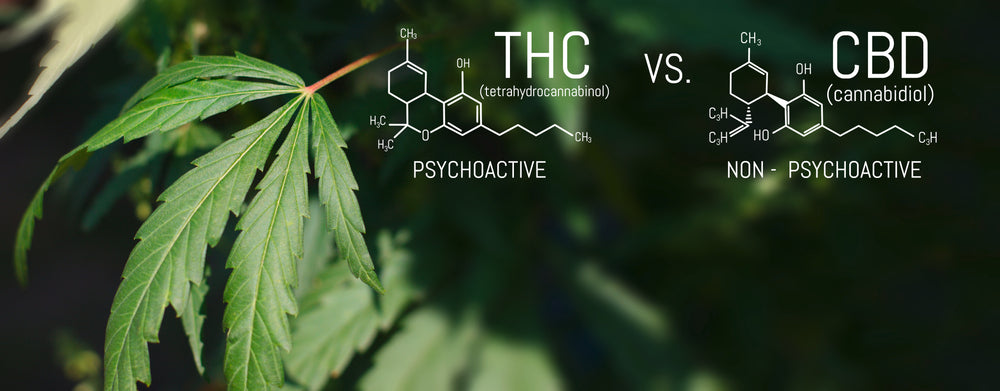
CBD (cannabidiol) and THC (tetrahydrocannabinol) are both cannabinoids found in the cannabis plant, but they act on the body and brain very differently. THC is psychoactive and produces the "high" associated with cannabis, while CBD is non-psychoactive and does not cause intoxication.
Cannabis is a Class B controlled drug in the UK, and THC is the main reason why. CBD in its pure, isolated form is not a controlled drug, which is why CBD oil and other CBD products can be sold legally, provided they meet UK food safety rules and contain no more than tiny traces of controlled cannabinoids. A prescription CBD medicine is licensed for some rare forms of epilepsy, but the wellness benefits claimed for over-the-counter CBD products have not been proven in clinical trials.
How much THC can CBD oil contain in the UK?
This is where much of the confusion around CBD and drug testing starts. Because the cannabis plant produces both cannabinoids, it is very difficult to extract CBD without carrying some THC across with it. The levels of THC left in a finished product depend largely on how it was made:
- Full-spectrum CBD: contains CBD plus a range of other cannabinoids from the plant, which can include trace THC.
- Broad-spectrum CBD: contains several cannabinoids but has had the THC removed, although very small traces can remain.
- CBD isolate: purified CBD on its own, with no THC.
The Home Office's position is that a CBD product can only fall outside UK drug controls if, among other conditions, it contains no more than 1mg of any controlled cannabinoid, such as THC, per container. Separately, the Food Standards Agency (FSA) advises healthy adults to limit the CBD they take from food to 10mg a day, and in 2025 it set a safe upper limit for THC in CBD food products of 0.07mg a day for an average-weight adult.
Did you know: the widely quoted "0.2% THC" limit for CBD oil is a myth. That figure relates to Home Office licences for growing industrial hemp, not to the CBD products sold to consumers.
Products don't always match their labels, either. Independent laboratory testing of CBD products on sale in the UK has found THC and other controlled cannabinoids in some of them, so a product described as THC-free is only as reliable as the testing behind it.
Can CBD oil make you test positive for THC on a drug test?
CBD itself is very unlikely to cause a positive cannabis result, because the cannabis panel on a drug test is designed to react to THC and its breakdown products, not to CBD. The risk comes from THC in the product. Factors that increase the chance of testing positive include:
- Using full-spectrum products: these are the most likely to contain measurable THC.
- Taking high doses every day: THC is fat-soluble and is stored in body fat, so small amounts taken daily can build up over time.
- Unregulated or mislabelled products: CBD vapes, imported oils and products bought from unknown online sellers are more likely to contain more THC than advertised.
- Highly sensitive tests: the lower a test's cut-off, the smaller the amount of THC needed to trigger a result, which is why ultra sensitive drug tests are more likely to pick up trace THC.
We have been made aware of positive THC drug test results in people using only legally sold CBD products, on both standard and ultra sensitive urine tests.
How urine drug tests detect THC-COOH after CBD or cannabis use
When THC enters the body, the liver breaks it down into several metabolites. The main one is THC-COOH (also written THC COOH, or 11-nor-9-carboxy-THC), which is inactive, stored in body fat and slowly released into urine. THC-COOH is what most urine drug tests are actually looking for, which is why cannabis can be detected in urine for days or even weeks after use, long after any effects have worn off.
There is no good evidence that the body converts CBD into THC, so a genuinely THC-free CBD isolate should not produce THC-COOH. If THC-COOH is found in a CBD user's urine, it has come from THC in the product.
Standard urine tests screen for THC-COOH at a cut-off of 50 ng/mL, but ultra sensitive tests now screen at 20 ng/mL and even 10 ng/mL. These lower cut-offs pick up lighter or less recent cannabis use, but they also make it more likely that trace THC from regular full-spectrum CBD oil use will show up.

Oral fluid drug tests for THC: what CBD users need to know
Oral fluid (saliva) drug tests are designed to show recent use. Most look for parent THC left in the mouth after smoking, vaping or swallowing a cannabis product, which is why their detection window is measured in hours rather than days. Cannabis saliva detection times are typically around 8 to 12 hours, though they can be longer in heavy or frequent users.
For most CBD users, oral fluid testing carries a lower risk than urine testing, but it is not zero. Research on people smoking low-THC "light cannabis" found THC in their oral fluid for a short time afterwards, at levels a standard 25 ng/mL on-site screen did not pick up but the most sensitive on-site tests might. Smoked or vaped CBD products are therefore more likely to register on a sensitive saliva test shortly after use than CBD capsules or food products.
Some newer ultra sensitive oral fluid tests detect THC-COOH in saliva rather than parent THC, with cut-offs as low as 3 ng/mL. Because THC-COOH is produced by the body rather than simply left in the mouth, testing for it helps to separate genuine use from passive exposure to someone else's smoke.

How sensitive are drug tests to levels of THC?
Drug tests are very sensitive to THC, but how low they go depends on the sample type and the test used. The table below shows typical cut-offs and detection windows for cannabis across the main testing methods.
| Test type | What it looks for | Typical cut-off | Typical detection window |
| Urine screening test | THC-COOH (THC metabolite) | 50 ng/mL standard; 20 or 10 ng/mL ultra sensitive | A few days after occasional use; up to 30 days or longer with heavy, regular use |
| Oral fluid (saliva) screening test | Parent THC, or THC-COOH on some newer tests | From 50 ng/mL down to 3 ng/mL on ultra sensitive tests | Around 8 to 24 hours |
| Hair test | THC and its metabolites in the hair shaft | Set by the laboratory | Up to around 90 days |
| Laboratory confirmation (LC-MS/MS) | Identifies and measures THC and THC-COOH individually | Usually 15 ng/mL THC-COOH in urine; around 2 ng/mL THC in oral fluid | Same as the original sample type |
For a full breakdown, see our guide to drug test detection times and cut-off levels, or try our drug detection time calculator.
What happens if you test positive for THC after using CBD?
A rapid urine or saliva drug test is a screening test only, and any non-negative result should be sent to a laboratory for confirmation before any decision is made. Our UKAS-accredited partner laboratory confirms results using liquid chromatography with tandem mass spectrometry (LC-MS/MS), the gold standard method for drug confirmation.
Tandem mass spectrometry separates the compounds in a sample and identifies each one by its unique molecular "fingerprint". This means the laboratory can report exactly which substances are present and at what concentration, ruling out false positives caused by cross-reacting medicines or foods. For cannabis, the urine confirmation cut-off used under European workplace testing guidelines is usually 15 ng/mL of THC-COOH, while oral fluid confirmation commonly looks for around 2 ng/mL of THC.
What confirmation cannot do is tell you where the THC came from. A confirmed THC-COOH result looks the same whether it came from cannabis or from THC in CBD oil. That is why anyone being tested should declare any CBD products on the drug testing consent form at the time of the test.

The takeaway for employers: decide in advance how your drug and alcohol policy treats CBD use, so that a confirmed THC result from an employee who uses CBD is handled consistently and fairly, rather than debated after the event.
Are there any drug tests that detect CBD use?
Standard workplace drug test kits and home drug test panels do not include CBD. However, if you specifically want to check for recent CBD product use, for example as a parent concerned about unregulated vapes, our vape drug test kits can help.
Our Vape Drug Test Kit with CBD screen contains three types of urine test strip: cotinine (for nicotine), cannabis THC at 50 ng/mL, and cannabinol (CBN) at 500 ng/mL. Cannabinol is a breakdown compound of hemp-derived cannabinoids and acts as a useful marker of recent CBD product use. Please note these strips test the person who has been vaping, not the vape liquid itself.

How long does CBD stay in your system for a drug test?
CBD can usually be measured in the body for several days after use, and for longer in people taking high doses every day, depending on dose, frequency of use, metabolism and body fat. In practice, though, this rarely matters for drug testing, because standard drug tests don't screen for CBD at all.
What matters is THC. If your CBD product contains trace THC, it is the THC-COOH from that product that a urine test may pick up, and in regular users THC-COOH can remain detectable for weeks rather than days.
How to reduce the risk of testing positive for THC when using CBD
If you use CBD and are subject to workplace or other drug testing, these steps will help to reduce the risk of an unexpected result:
- Choose CBD isolate or broad-spectrum products labelled as THC-free, rather than full-spectrum CBD oil.
- Check the certificate of analysis: look for an independent, batch-specific lab report showing THC and other controlled cannabinoids as "not detected".
- Buy from reputable UK sellers whose products follow Food Standards Agency advice on CBD, and stick to the advised 10mg a day.
- Avoid unregulated CBD vapes and imported products with no lab testing.
- Tell the person carrying out your test about any CBD products you use, before the test is done.
- For peace of mind, an at-home cannabis drug test can show whether your CBD routine is producing a positive THC screen.
CBD and drug testing in the UK: frequently asked questions
Will CBD oil make me fail a workplace drug test in the UK?
Not if it is genuinely THC-free. Regular use of full-spectrum CBD oil, or a product containing more THC than its label states, can lead to a positive THC screen. Any non-negative workplace result should then be confirmed by a laboratory using tandem mass spectrometry, and a confirmed result will be reported as THC, not CBD.
Does CBD show up on a police roadside drug test in the UK?
Police roadside drug tests use an oral fluid sample and look for THC, not CBD. However, a CBD product containing THC could still produce a positive roadside result, particularly if it was smoked or vaped shortly beforehand.
Can a laboratory drug test tell the difference between CBD oil and cannabis use?
A laboratory can measure CBD separately if asked to, but finding CBD alongside THC does not prove the THC came from a CBD product, because cannabis itself contains CBD. This is why declaring CBD use at the time of the test, and having a clear workplace policy, matters so much.
Do CBD gummies and drinks carry the same drug test risk as CBD oil?
The risk depends on the type of CBD extract used and how much you take, rather than the format. Any product made from full-spectrum extract can contain trace THC, whether it is an oil, gummy or drink. Unregulated CBD vapes generally carry the highest risk.
The information in this article is provided for general educational purposes only and does not constitute legal or medical advice. The rules on CBD products under the Misuse of Drugs Act 1971, the Misuse of Drugs Regulations 2001 and Food Standards Agency guidance can and do change; always check current guidance or seek professional legal advice if you need definitive, up-to-date information.
Point-of-care drug test kits are screening tests only. Any non-negative result should be confirmed using an accredited laboratory confirmation drug test before any decisions or actions are taken based on the result.
CBD can interact with some medicines, and the FSA advises against taking CBD if you are pregnant, breastfeeding or trying to conceive. Speak to your GP or pharmacist before using CBD if you take any medication, and if you have concerns about your own or someone else's drug use, please speak to a healthcare professional or a dedicated drug and alcohol support service.