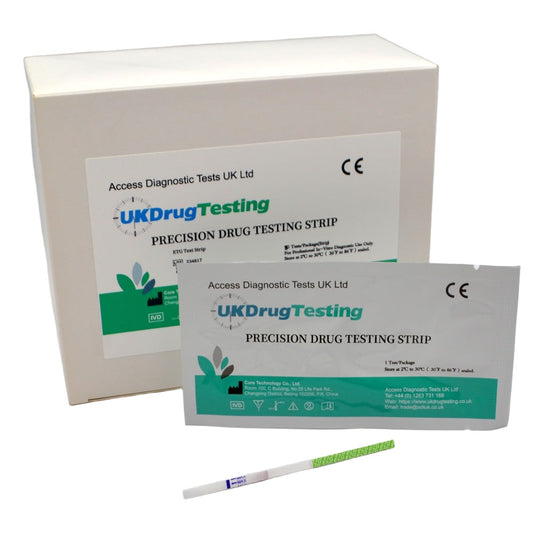
Collection: ETG Urine Test Strips

An ETG test, or Ethyl Glucuronide test, is an alcohol urine test and is a method used to detect recent alcohol consumption by measuring the presence of ethyl glucuronide, a metabolite of ethanol (alcohol), in urine samples.

2 products

ETG Test

An ETG test is an alcohol urine test that is often employed in settings requiring alcohol abstinence verification, such as legal proceedings, workplace alcohol testing, or substance abuse treatment programs. The ETG test is performed on a urine sample and can detect alcohol consumption for up to several days after ingestion, depending on various factors such as the amount of alcohol consumed, and the metabolism of the individual being tested. metabolism.

Why is the ETG test also known as the 80 hour alcohol test?

The ETG test is sometimes referred to as the "80-hour alcohol test" because it has the capability to detect the presence of ethyl glucuronide (ETG), a metabolite of ethanol (alcohol), in urine samples for an extended period of time after alcohol consumption. While traditional alcohol tests, such as breathalysers, can only detect alcohol for a relatively short period (usually up to 24 hours), ETG testing can detect alcohol consumption for a longer duration, often up to approximately 80 hours (although in practice it is often only up to 72 hours) after the last drink. This extended detection window makes the ETG test valuable in situations where a longer history of alcohol use needs to be assessed, such as in probation programs, workplace testing, or alcohol treatment programs.

Performing an ETG test on a urine sample using an ETG urine test strip:

  1. First read the instructions supplied with the ETG test.
  2. Prepare the test strip for use.Remove the ETG test strip from its foil pouch 
  3. Check the expiration date before use.
  4. Collect a fresh urine sample: Use a clean and dry container to collect a urine sample from the individual being tested. Ensure the sample is sufficient for testing purpose
  5. Dip the test strip into the urine sample: Remove the ETG test strip from its packaging. Dip the absorbent end of the strip into the urine sample for the duration specified in the test instructions, usually a few seconds.
  6. Remove Excess Urine: After dipping, gently tap the strip on the edge of the container to remove excess urine.
  7. Wait for Results: Place the test strip on a clean, flat surface and wait for the specified time, usually 3-5 minutes, for the results to develop. Avoid touching the test area or allowing it to come into contact with any surface.
  8. Read Results: After the specified waiting period, observe the test area for the presence or absence of a coloured line. The appearance or absence of lines according to the instructions provided indicates the result of the ETG test.
  9. Interpret Results: Follow the interpretation guidelines provided with the test kit. Typically, the presence of a line (even faint) next to the "T" (test) line indicates a negative result, while the absence of a line indicates a positive result.
  10. Dispose of the ETG Test Strip: Safely dispose of the used test strip according to local regulations and manufacturer instructions.

Always ensure that you follow the specific instructions provided with the ETG test kit that you are using, as procedures and interpretation guidelines may vary slightly between different ETG test manufacturers.

How accurate are EtG test strips?

ETG test strips are generally highly accurate and sensitive when used correctly. They are designed to detect ethyl glucuronide (EtG), a direct metabolite of alcohol, and can identify even small amounts of alcohol consumption within the detection window (up to 80 hours).

However, accuracy can be influenced by a few factors:

  • Correct usage – following the instructions carefully is essential
  • Timing of the test – testing too early or too late can affect results
  • Individual metabolism – how quickly your body processes alcohol
  • ETG test strip sensitivity (cut-off level) – different brands of tests detect different minimum levels of EtG

Overall, EtG urine test strips are widely used in professional, legal, and personal settings because they provide a reliable indication of recent alcohol use, though they do not measure how much alcohol was consumed.

ETG test common FAQ

The Ethyl Glucuronide (EtG) test is a popular method for detecting alcohol consumption. Below is a comprehensive FAQ that addresses commonly asked questions about the EtG test:

Collapsible content

Does an ETG test tell you how much alcohol was consumed?

The EtG test does not precisely quantify the amount of alcohol consumed. Instead, it indicates whether alcohol has been consumed recently and gives a general idea of the level of consumption based on the concentration of ethyl glucuronide (EtG) in the sample.

What is the EtG test?

The EtG test detects the presence of ethyl glucuronide, a direct metabolite of ethanol (alcohol), in urine. It's used to monitor alcohol consumption over a period ranging from hours to days.

How does EtG get into the body?

When alcohol is consumed, it is metabolised in the liver. A portion of the ethanol is converted into ethyl glucuronide, which is then excreted in bodily fluids like urine.

How is the EtG test administered?

The test typically involves collecting a sample of urine, blood, or hair. Urine tests are the most common type of ETG test, but hair tests can detect alcohol use over a longer period (up to 90 days).

How long after drinking can EtG be detected in urine?

EtG can be detected in urine up to 72 hours after the last drink, though the detection window can vary depending on factors such as the amount of alcohol consumed, individual metabolism, and hydration levels.

What do the ETG test results mean?

Positive results on a urine ETG test indicate recent alcohol consumption. The test can differentiate between light, moderate, and heavy drinking based on the concentration of EtG. Negative results suggest no significant alcohol consumption within the last 72 hours.

Can the EtG test distinguish between different types of alcohol consumption?

The test measures the presence of EtG, not the specific type of alcohol consumed. It cannot differentiate between beer, wine, spirits, or other alcoholic beverages.

How sensitive is the EtG test?

The EtG test is very sensitive and can detect even low levels of alcohol consumption. This sensitivity is why it's often used in zero-tolerance settings like rehabilitation programs and court-ordered monitoring.

Can the EtG test give false positives?

Yes, false positives can occur. EtG can be detected after exposure to alcohol-containing products such as mouthwash, hand sanitisers, and certain foods. It’s important to inform the testing entity of any potential sources of incidental alcohol exposure.

How accurate is the EtG test?

While the EtG test is highly accurate for detecting recent alcohol use, it’s not foolproof. It’s best used as part of a broader assessment rather than as the sole indicator of alcohol use.

What should I do if I have a positive EtG test but did not consume alcohol?

You should report all possible sources of incidental alcohol exposure to the testing authority. This could include use of mouthwash, certain medications, or exposure to any products containing alcohol.

How should I prepare for an EtG test?

Avoid all alcohol consumption and products containing alcohol for at least 80 hours before the test. Be cautious with personal care products and medications that might contain alcohol.

Who typically uses the EtG test?

The EtG test is used by employers, probation officers, rehabilitation programs, and healthcare providers to monitor individuals’ alcohol consumption.

How does the EtG test compare to breathalyser tests?

Breathalyser tests measure current blood alcohol content (BAC) and are useful for determining current intoxication. EtG tests are more effective for determining alcohol consumption over the previous 2-3 days.

Is there a correlation between EtG levels and the amount of alcohol consumed?

While there is a general correlation between EtG levels and the amount of alcohol consumed, it is not precise. Factors such as individual metabolism, the timing of alcohol consumption, and hydration levels can influence the concentration of EtG in the body.

Can you do an EtG test at home?

Yes, EtG tests are simple to use at home and do not require any specialist equipment. Most kits use a dip-and-read urine test strip, making them quick, convenient, and discreet.

To use an EtG test at home:

  1. Collect a fresh urine sample in a clean container
  2. Dip the ETG test strip into the urine sample for the recommended time
  3. Wait a few minutes for the result to develop
  4. Read the result using the provided guide

Home EtG tests are a reliable option for personal monitoring, recovery support, or reassurance, offering results within minutes. For best accuracy, always follow the instructions provided with your ETG test kit.

Do heavy drinkers process EtG faster?

No, heavy drinkers do not typically process EtG faster. In fact, heavy alcohol consumption usually leads to higher levels of EtG in the body, which can remain detectable for longer periods of time.

While individual metabolism varies, heavier or more frequent drinking increases the amount of EtG produced, meaning it may take longer to clear from the system, not faster. Factors such as liver function, hydration, and overall health can also influence how quickly EtG is eliminated.

Can I pass an EtG test after 5 days?

In most cases, yes. EtG is typically detectable in urine for up to 80 hours (around 3–4 days) after alcohol consumption, so after 5 days, it is usually no longer detectable.

However, detection times can vary depending on factors such as:

  • Amount of alcohol consumed
  • Frequency of drinking
  • Individual metabolism and health

For heavy or prolonged drinking, EtG may remain detectable slightly longer, but 5 days is generally beyond the standard detection window for most EtG urine tests.

What alcohol has the highest EtG?

No particular type of alcohol produces “higher” EtG than another. EtG is created when your body processes ethanol, which is the same in all alcoholic drinks—whether it’s beer, wine, or spirits.

What matters most is the amount of alcohol (ethanol) consumed, not the type of drink. For example:

  • A large quantity of beer can produce the same (or more) EtG as a small amount of spirits
  • Stronger drinks or larger servings will generally lead to higher EtG levels

In simple terms, more alcohol consumed = more EtG produced, regardless of the source.

How expensive is an EtG test?

EtG test pricing actually varies quite a bit depending on whether you’re buying single EtG urine test strips, small packs, or bulk/professional kits or paying for a lab test.

EtG test strips are generally affordable, with prices starting from around £2–£3 per test. Small home-use packs typically cost £6–£10, while larger bulk packs used in professional settings or laboratory tests can cost £100 or more, depending on quantity.

For most people, home testing is very low cost. The price per test drops significantly when buying in bulk Compared to lab testing (£100+), urine EG test strips are the most cost-effective option

Can EtG detect a sip of alcohol?

In most cases, a very small sip may not produce enough EtG to exceed the test threshold, but it is still possible—especially with highly sensitive ETG tests. For this reason, if you are being tested, it’s best to avoid alcohol completely within the detection window.

EtG tests are very sensitive and can sometimes detect even a small amount of alcohol, including a sip. However, whether it shows as a positive result depends on several factors, such as the size of the sip, the test’s cut-off level, and individual metabolism.